Category Archives: News

Walt Bresette, Ojibwe Leader and Environmental Hero, in Wisconsin Conservation Hall of Fame

Dr. Al Gedicks

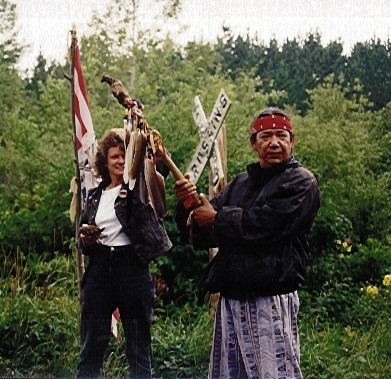
Sandy Lyon and Walt Bresette at the acid train blockade on the Bad River Ojibwe reservation. | Photo by Kathy Olson, published with permission.

Ojibwe environmental and treaty rights activist Walt Bresette will be inducted posthumously into the Wisconsin Conservation Hall of Fame (WCHF) in a virtual ceremony on April 17, 2024. Bresette will join over 100 members inducted since the Hall of Fame’s  inception, including Aldo Leopold, Nina Leopold Bradley, John Muir, Gaylord Nelson and Menominee Nation environmentalist Hilary Waukau, Sr.

Bresette (1947-1999) was a member of the Red Cliff Band of Lake Superior Ojibwe, and a long-time treaty rights and environmental activist, author, artist, storyteller, organizer and public speaker. He was an outspoken advocate for Ojibwe treaty rights who asked people to come to the spring boat landings in northern Wisconsin during the spearfishing conflict (1980s-1990s). Walt wondered why people chose to go so far away to show support for others when there were urgent calls for solidarity closer to home. Bresette said, “You don’t have to go to Nicaragua to witness, you can witness in your own backyard.”

Walt was a founder of the Witness for Non-Violence for Treaty and Rural Rights in Northern Wisconsin, modeled on the group Witness for Peace, which was active during the Central American wars (especially in the Contra-backed areas of Nicaragua). The Wisconsin witnesses documented anti-Indian harassment and violence at the boat landings. By 1992, the efforts of the witnesses and a federal court injunction against anti-Indian harassment decreased the violence at the boat landings.

Bresette was a prolific organizer who brought together Native American and rural white communities through organizations like the Midwest Treaty Network, the Upper Great Lakes Green Network and the Wisconsin Greens. He said that the fight between Natives and non-Natives over the walleye harvest diverted attention from the far more significant pollution threat to the Wisconsin fishery for both groups from proposed metallic sulfide mining. 

One of his most powerful messages was that Ojibwe treaty rights provided the greatest environmental protection against destructive metallic sulfide mining, like the Crandon and Ladysmith mining projects, in the ceded territory of the Lake Superior Ojibwe tribes. This was not because the tribes had a direct claim to minerals –—they definitely did not — but because mining threatens the environment, and a threat to the environment is a threat to Ojibwe fishing, hunting and gathering rights. Treaty rights provide the Ojibwe tribes with legal standing in federal courts to protect the habitat of fish, deer and wild rice. 

Bresette was a leader in the successful resistance to the controversial Crandon mine next to the Sokaogon Ojibwe reservation (2003) and he led the grassroots campaign to enact Wisconsin’s “Prove It First” Mining Moratorium law. The law, signed by Governor Tommy Thompson on Earth Day, 1998, prohibited the opening of a new mine in a sulfide ore body until a mining applicant could prove they had not polluted surface water or groundwater in any of their previous mines in the U.S. or Canada.

As a non-violent Ogichidaag (protector of the people), Bresette was active in the opposition to the Rio Tinto/Kennecott copper mine next to the Flambeau River near Ladysmith, Wisconsin. In 1991, the Lac Courte Oreilles Ojibwe and the Sierra Club obtained a preliminary injunction against mine construction because the Wisconsin Department of Natural Resources (DNR) had failed to conduct an environmental assessment for endangered resources in the Flambeau River. Despite the restraining order, Kennecott continued construction activity at the site. 

Bresette said that the State of Wisconsin had failed to protect the interests of the Lake Superior Ojibwe and decided to take action to protect the environment.   

I witnessed Bresette climbingover a 10-foot security fence at the Flambeau mine site carrying a club once used by Black Hawk, and “counted coup” on a giant earth mover. The act of hitting the machine was a symbolic scoring of victory against one’s enemies but did no physical damage. In his trial for trespassing on mining company property,  Bresette said the mining permit was illegal because the State of Wisconsin did not consult the Lake Superior Ojibwe about their treaty rights in the fishery of the Flambeau River before it issued the mining permit. 

I interviewed Bresette for my documentary film, Anishinaabe Niijii (Friends of the First People), about the Indian and environmental resistance to the proposed Flambeau mine. Bresette and his good friend Sandy Lyon were co-founders of Anishinaabe Niijii. He said, “Someday our children are going to rise up and say, ‘Where were you when they poisoned my river?’”  His words were prescient. The mine operated from 1993 to 1997. A Flambeau River tributary that crosses part of the reclaimed project site remains polluted to the present day.

Bresette and the Ogichidaa from the Bad River Ojibwe reservation were more successful in 1996 when they blockaded trains traveling through the reservation carrying sulfuric acid to a nearby copper mine in Michigan’s Upper Peninsula. The Ogichidaa were concerned that the tracks were unsafe and that a spill from tankers would poison reservation water and the largest wild rice stand in the Great Lakes region. The blockade lasted 28 days and prevented the transport of sulfuric acid across the reservation as a federal mediator conducted talks between the Ogichidaa, the tribe and the railway. The blockade and the assertion of tribal sovereignty protected the Bad River’s sacred wild rice beds and won the support of surrounding communities.

Walt was a charismatic storyteller who was a regular keynote speaker at the many Protect the Earth festivals, organized by Sandy Lyon, on Indian reservations throughout northern Wisconsin.  His vision of a Seventh Generation Constitutional Amendment adopted the Iroquois concept that required Iroquois leaders to think about how today’s decision will affect the seventh generation into the future. The amendment promoted “the rights of the people to use and enjoy air, water, sunlight, and other renewable resources determined by the Congress to be common property, nor shall such use impair their availability for the future generations.” 

Sandy Lyon summarized Bresette’s influence eloquently in a radio tribute broadcast on Woodland Community Radio WOJB-FM on the Lac Courte Oreilles reservation: “He was like the North Star and the people followed him.”

*published with permission.
Wolf River Mining Project Update: Reduction in Number of Drilling Sites & Holes

by Ron James

Wolf River Mining Project Update: Thanks to all the people asking questions to the DNR they had to add a ‘Frequently Asked Questions’ document on the DNR website addressing exploration on MFL enrolled land. Is their explanation acceptable?

Due to increased public scrutiny Badger Minerals withdrawals some of the drilling sites and reduces the total number of holes.

Because so many people phoned, emailed, and wrote letters to the DNR staff, they were forced to address the decision to grant a metallic sulfide mining exploration license on Managed Forest Law enrolled land. The DNR included a statement about exploration drilling on tax-payer subsidized MFL land:

“The current site activity is metallic mineral exploration, not a commercial mining project. Exploratory drilling is not specifically prohibited under Wisconsin’ Managed Forest Land Program as established in Ch. 77, Wis. Stats.”

Does this explanation satisfy the tax-paying public? Ch. 77 Wis. Stats is very clear about “mining operations”. In fact, the words “mining operations” appears as a specific reference to what type of surface disturbance would make the land “ineligible” for enrollment in the MFL Program. To be clear, “mining operations” make the land ineligible for the forestland owner to receive the pennies per acre tax rate deal for land they have enrolled in the MFL Program. Metallic sulfide mineral exploration drilling is surely a “mining operation”, yet The Forestland Group is enjoying the spectacularly low, tax-payer subsidized, property tax rate!

The DNR also includes a description about ‘bulk sampling’ and leaves it unclear if they would also allow the removal of up to 10,000 tons on material from MFL enrolled land. Using the same reasoning the DNR used to allow the drilling of 800-foot deep holes in MFL land, would equate to the DNR allowing the removing of 10,000 tons of material because the words ‘bulk sampling’ also do not appear as an activity that is “not specifically prohibited under Wisconsin’ Managed Forest Land Program as established in Ch. 77, Wis. Stats”. 

The mining company (Badger Minerals) had also proposed to drill a hole in an alternative location where there has is always standing water on the surface of the earth. Due to the increased scrutiny the DNR is fielding about the project as a whole, they told Badger Minerals that the location was not acceptable. Badger Minerals withdrew the request to drill in that location. It now appears they are down to nine holes from the initial ten.

The project is running over the initial time period it was supposed to take. Badger Minerals has applied for a ‘Mineral Exploration License Renewal’ and the DNR is considering that now. If anyone would like to contact the DNR and voice concerns about granting a renewal for this license on MFL enrolled land, you can contact DNR staff at the numbers and email addresses shown below. Remember to inquire about how “mining operations” are not allowed on MFL Land, yet ‘metallic sulfide mineral exploration’ is!

Preston D. Cole, DNR Secretary, 608-266-2621, preston.cole@wi.gov

Ben Callan, Integration Services Section Chief, 608-266-3524, benjamin.callan@wi.gov

Kyle McLaughlin, Waterways & Wetlands, 715-360-6148, kyle.mclaughlin@wi.gov

Michelle Balk, Wastewater, 715-635-4054, michelle.balk@wi.gov

Melisa Yarrington, Stormwater & Erosion Control, 715-359-0192, melissa.yarrington@wi.gov

Stacy Rowe, Endangered Resources, 608-266-7012, stacy.rowe@wi.gov

The DNR website showing all the documents is here: https://dnr.wi.gov/topic/Mines/Projects.html

Schoepke Drilling Site Protest News Coverage

Multiple news sources, including News Watch 12 and Antigo Daily Journal, covered resistance to Badger Minerals LLC exploratory drilling in Schoepke on June 1, 2020.

See below from the Antigo Daily Journal, by Brandon Kieper


Mine opponents gather near drill site in respectful protest

It was a protest as peaceful as the forest it took place in, on an otherwise sleepy Monday morning near the headwaters of the Wolf River.

Robert Van Zile, an elder in the Mole Lake Sakoagan Chippewa community, helped organize the event, designed to generate further opposition to the sulfide exploratory drilling project by Badger Minerals. The drilling was scheduled to begin Monday.

“What we’re trying to do is put a notice to the mining company, and the people at large who are behind this, that we want to let them know that we are not OK with this,” Van Zile said. “We don’t want this mining happening in this part of the country. Mining is devastating to the environment, and to the water, it could eventually kill a lot of people, it could kill plants, there’s a lot of bad things that could happen.”

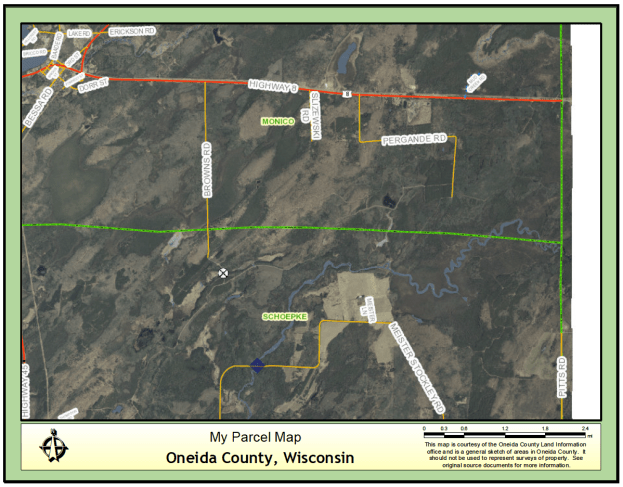
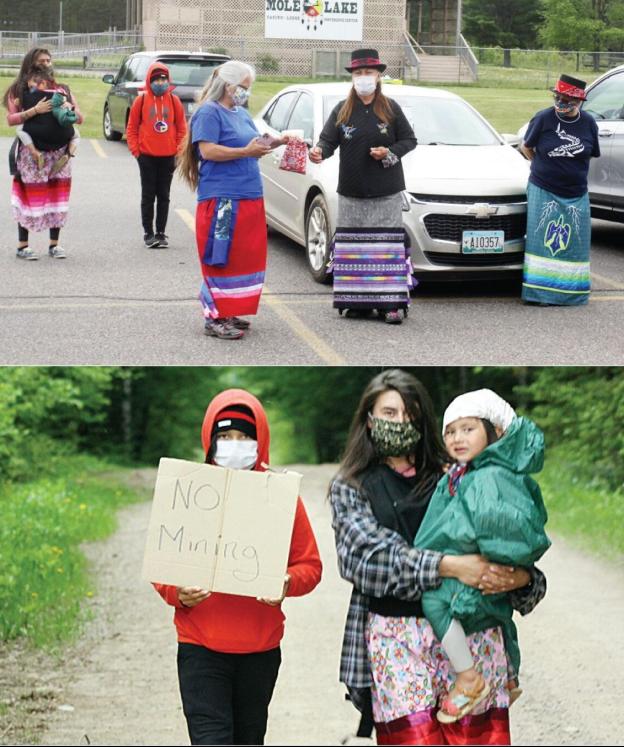
Several dozen activists, both tribal members and other concerned citizens, gathered in the back parking lot of the Mole Lake Casino, then traveled in a caravan the 18 miles to Browns Road in the Oneida County town of Monico.

The activists parked along the gravel road and staged their protest, a symbolic walk south along the road, through the forest towards the drilling site. It was the second such trek along this path, as a group of over 100 people gathered in March, with signs and prayer ties, in an initial attempt to persuade the company and Department of Natural Resource’s to alter their plans.

On Monday, the activists discovered many of those prayer ties now on the ground, felled in the clear-cutting that took place at the drilling site.

Dawn Wilber, Menominee Tribal member, was another event organizer. She explained that the protest group was small by design, and no matter what the situation, absolutely committed to maintaining peace, both with nature and any potential adversaries.

“This is a peaceful event, we’re just here to let Badger Minerals know that we are here, and we don’t approve of this,” Wilber said. “We’re not here to stop them, not here to blockade anything, we’re not here to harm them in any way. We’re just here on a peaceful mission to let them know that we exist and we are not going away.

“We wanted to keep this organization small, once you get too many people trying to stir the pot, things start to get spilled over and it becomes a little bit of a mess. It worked out good, we have a good showing here. It doesn’t need to be a lot, it needs to be quality, and I think that’s what we achieved today.”

The thing is, there was no sign of any drilling activity on Monday. Along the walk, the activists did encounter one logging truck, appearing to make its way from the drill site. Perhaps because of the rain bearing down on the area as the protestors walked, the company elected not to begin the project. The latest information from the DNR now says drilling will begin Wednesday.

Badger Minerals, a Michigan-based subsidiary of a Canadian company, is primed and ready to drill eight exploratory holes to find out what lies beneath the site in the town of Schoepke.

The plans were recently approved by the DNR. The drilling will run 24 hours a day for approximately 25 days, with an anticipated disturbance of 34,500 square feet. It’s unclear what the project may discover: Z0inc, copper, lead, silver, gold, are possibilities. Badger Minerals has contracted with Taconite Drilling of Warba, Minn. for the project.

Multiple drill sites are located within a half-mile of the Wolf River, which flows through eight counties and over 30 townships before it drains into Lake Winnebago. The water that begins in Oneida and Langlade counties then flows into the Fox River and ultimately into Lake Michigan. Twenty-five percent of the water in Lake Michigan begins its journey in the Wolf-Fox watershed.

Keziah Williams-Alloway, an enrolled member of Forest County Potawatomi, brought her children Quinn and Neo Martin, ages four and 10, to be part of the event. She believes that their future is what’s really at stake.

“I would love to preserve our natural resources for future generations,” Williams-Alloway said. “We believe in thinking ahead for the next seven generations, and they are the first of that seven, so it is very important to me. To make sure that they, as well as everyone else in this world, have access to clean water.”

Williams-Alloway also mentioned she was not surprised by the turnout from multiple area native communities.

“We all believe very strongly in protecting our earth, it provides for everyone, so when necessary we all support one another to the best of our abilities,” she said.

Right before the group left the Mole Lake parking lot, Van Zile offered a traditional prayer, setting the somber tone for the walking demonstration.

“I was asking the spirits to watch over us, so nobody gets hurt, and I was praying for this mining company,” he explained. “What we are doing is, we are washing our hands with them, and when we wash our hands with them, they can’t plead ignorance. 

“Something else is going to happen here, it’s going to be bigger, and it’s going to be more severe. The pollution is part of it, but it’s not the only thing.”

In an email to public radio station WXPR, Badger Minerals geologist Eric Quigley said that the company is “aware of the public concerns that have been raised.” He said, however, that he believes those concerns are more related to a possible eventual mining process, not this exploratory drilling.

“We feel it is a little early on in the project to begin to address mining related issues/concerns without having an adequate understanding of the geology and potential mineral deposits that may or may not exist at the site,” Quigley said.